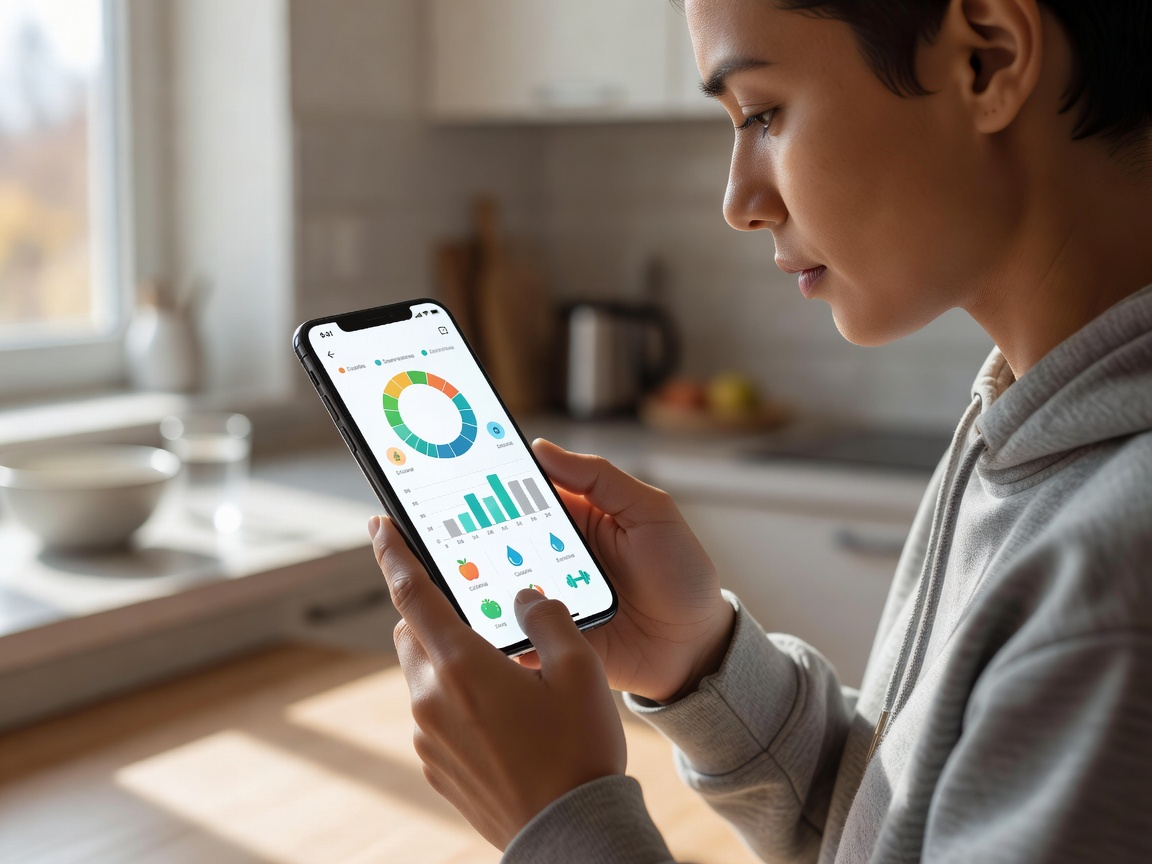
Calorie tracking is arguably the most effective tool for weight management. It removes the guesswork from dieting by providing empirical data on exactly what you are fueling your body with. However, tracking inaccurately can lead to frustration and stalled progress.
Calculating Your Basal Metabolic Rate (BMR)
Before you track, you need a target. Your BMR is the number of calories your body burns at rest to maintain vital functions. Formulas like the Mifflin-St Jeor equation provide a solid estimate. Once you have your BMR, you multiply it by an activity multiplier to find your Total Daily Energy Expenditure (TDEE). Subtracting 500 calories from this TDEE gives you a standard weight loss target.
The Power of the Digital Food Scale
Volume measurements (cups, tablespoons) are notoriously inaccurate for solid foods. A tablespoon of peanut butter can vary wildly in caloric content depending on how generously it is scooped. To track properly:
- Weigh all solid foods in grams or ounces using a digital food scale.
- Track foods in their raw/uncooked state whenever possible, as cooking methods alter water weight and volume.
- Don't forget liquid calories! Cooking oils, sauces, and sugary drinks contribute significantly to daily totals.
Digital Tools and Applications
Leverage technology to make tracking seamless. While we do not endorse specific third-party applications, utilizing established database apps (like those available on iOS and Android) allows you to scan barcodes and save frequently eaten meals. This drastically reduces the time spent logging food each day.
Overcoming Tracking Fatigue
Tracking every morsel of food can become mentally taxing. To combat diet fatigue, consider taking "diet breaks" where you eat at maintenance calories for a week, or practice tracking your core meals while estimating snacks, once you have developed a strong intuitive understanding of portion sizes.